Contact Pest Control Excellence
Service area: George and the wider Garden Route

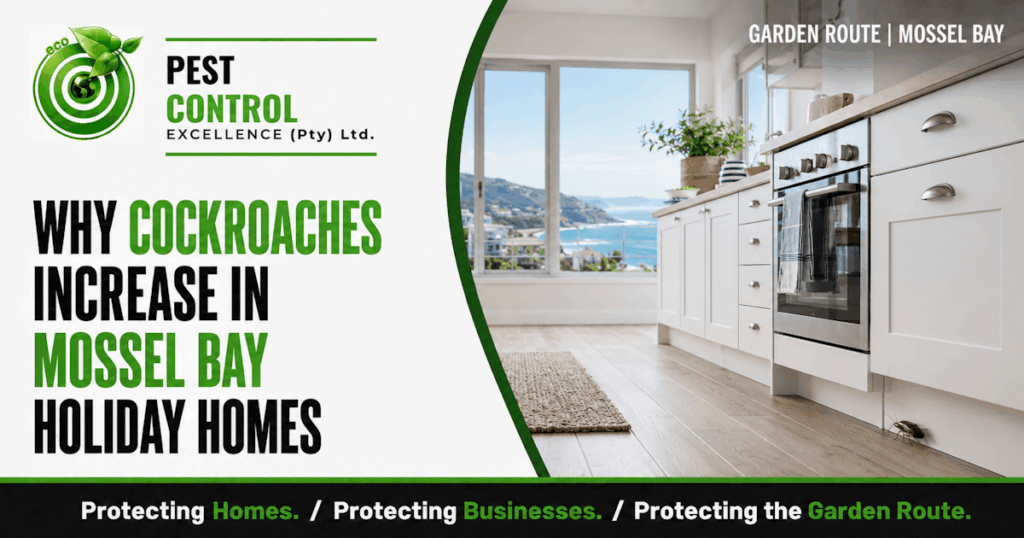
Stilbaai is known for its peaceful coastal setting, family holiday homes, permanent residences, self-catering accommodation and properties situated close to the Goukou River and the ocean.
While the coastal environment is one of Stilbaai’s greatest attractions, conditions around certain properties can also support cockroach activity. Moisture, warmth, food residue, sheltered storage areas and periods when a property remains unoccupied may create suitable conditions for cockroaches to enter and survive.
Coastal properties may also experience increased humidity, condensation, salt-air exposure and moisture around kitchens, bathrooms, garages and outdoor entertainment areas. These conditions do not automatically cause a cockroach infestation, but they can make a property more attractive when food and hiding places are also available.
Understanding how to prevent cockroaches in Stilbaai coastal properties can help homeowners and property managers identify risks early and protect the property before a small problem becomes established.
Cockroaches require food, water, shelter and suitable temperatures. A coastal home may provide these necessities in several visible and concealed areas.
Common contributing conditions may include:
Cockroaches are capable of hiding in narrow cracks and dark, protected spaces. A property can therefore appear clean while still containing food residue, water and suitable harbourage in areas that are seldom inspected.
Prevention must extend beyond ordinary surface cleaning. It should also include moisture management, maintenance, exclusion and regular inspection.
Water is one of the most important resources supporting cockroach activity. Even small amounts of persistent moisture may be sufficient.
In Stilbaai coastal properties, moisture may develop around:
Condensation may also form inside closed properties, particularly where airflow is limited. A cupboard that remains damp can offer cockroaches both moisture and protection.
Homeowners should inspect plumbing connections regularly and repair leaks as soon as possible. Wet cloths, sponges and dishwater should not be left overnight, and water should not be allowed to collect beneath appliances or inside cupboards.
Ventilation can help reduce damp conditions, but it must be managed without leaving unscreened openings that allow pests to enter.
A kitchen may look clean while still providing cockroaches with enough food to survive.
Crumbs, oil and grease can accumulate:
Cockroaches can feed on very small quantities of food. Cleaning visible work surfaces is therefore only one part of prevention.
Move accessible appliances periodically and clean the concealed areas behind and beneath them. Wipe grease from cupboard surfaces, clean food spills immediately and avoid leaving dirty dishes overnight.
Dry food should be stored in strong containers with tightly fitting lids. This is especially important in holiday properties that may remain unoccupied for several weeks.
Food packaging can provide both a food source and a hiding place.
Items such as cereal, flour, sugar, biscuits, pasta and pet food should not remain in open packets. Transfer products into sealed containers where practical.
Owners of holiday homes should also check food-storage areas before closing the property for an extended period. Expired food, damaged packaging and unnecessary supplies should be removed.
Additional precautions include:
Cockroaches or their egg cases can occasionally be transported into a property in boxes, bags, appliances and other stored items.
Waste bins can provide cockroaches with food, moisture and shelter.
Indoor bins should:
Outdoor refuse bins should also have properly fitting lids. Where possible, they should not be placed directly against doors, windows or exterior walls.
Clean spilled waste around bins and remove accumulated organic material. Bottle-recycling containers, pet-food bowls and braai areas should also be cleaned regularly.
During busy holiday periods, waste volumes can increase quickly. Owners and property managers should ensure that refuse arrangements remain adequate when more guests are staying at the property.
Cockroaches may enter from gardens, drains, service areas, neighbouring properties or shared spaces. They may also be transported indoors in luggage, boxes and supplies.
Common entry points include:
Inspect doors and windows and repair damaged seals. Door sweeps can help close gaps beneath exterior doors, while suitable sealants can be used around pipes and utility openings.
Ventilation openings should not simply be blocked, as airflow remains important in coastal properties. Suitable pest-resistant screening may provide a better solution where ventilation is required.
Sealing entry points is most effective when combined with sanitation and moisture control.
Cockroaches prefer protected spaces where they can remain undisturbed. Cluttered cupboards, garages and storerooms provide numerous hiding places and can make inspections difficult.
Cardboard is particularly problematic because its folds and enclosed spaces can provide shelter. Boxes may also absorb moisture in damp areas.
To reduce potential harbourage:
An organised storage space makes it easier to identify droppings, egg cases, dead cockroaches or other signs of activity.
Cockroaches may use plumbing routes and gaps around pipes to move through a building. Kitchens, bathrooms and laundry areas should therefore be inspected carefully.
Property owners should:
In apartment buildings and complexes, cockroaches may move between units through shared plumbing, service ducts and wall cavities.
If cockroach activity continues despite good housekeeping, the source may be located beyond the room or unit where the insects are being seen.
Many Stilbaai properties are used mainly during weekends, school holidays or the festive season. A property that remains closed and quiet for extended periods can allow concealed activity to continue unnoticed.
Before leaving a coastal holiday home unoccupied:
The property should also be inspected before guests or family members arrive. This allows enough time to address a moisture problem, warning signs or a possible infestation without disrupting the stay.
Early action is important because cockroaches usually remain concealed during the day.
Possible warning signs include:
One visible cockroach does not always reveal the full extent of the problem. Other cockroaches may be hidden inside cupboards, appliance motors, cracks, plumbing voids or wall cavities.
Cleaning staff, tenants and property managers should report warning signs immediately rather than only removing the visible insect.
A household aerosol may kill a cockroach that is visible, but it does not necessarily reach the hidden harbourage or breeding area.
Repeated or excessive spraying can also disturb cockroaches and cause them to move into other protected areas.
Long-term prevention requires several measures working together:
Pesticides alone will not correct leaking pipes, exposed food, open access points or cluttered storage areas. These supporting conditions must also be addressed.
Professional assistance should be considered when:
A professional cockroach-management programme may include identifying the species, locating harbourage areas, assessing moisture and food sources, identifying entry routes and selecting an appropriate treatment method.
Follow-up monitoring may be recommended where the infestation is established or where the property has continuing risk factors.
Pest Control Excellence has provided professional pest-management services since 2007.
We assist permanent residents, holiday homeowners, accommodation establishments, property managers and businesses throughout Stilbaai and the surrounding Garden Route.
Our approach is based on inspecting the property, understanding the conditions supporting the infestation and applying an appropriate treatment plan. Practical prevention recommendations can also help property owners reduce the likelihood of recurring activity.
For more information about the complete range of services available locally, visit our Pest Control in Stilbaai Service Area page.
Preventing cockroaches in a coastal property requires more than occasional spraying. Moisture, food residue, clutter, waste and small entry points must all be managed carefully.
Regular inspections are especially important for holiday homes that remain unoccupied for extended periods. Addressing leaks, improving ventilation, cleaning concealed areas and storing food securely can make the property far less attractive to cockroaches.
If warning signs continue or the infestation returns, professional inspection can help identify the hidden source and determine the most appropriate treatment.
Service area: George and the wider Garden Route